
Debtica Module
Valuation
Decision support for portfolio value and risk.
Valuation
Where it fits
Use Valuation when a portfolio needs pricing support, expected recovery views or structured decision material before action.
Transparent assumptions
Comparable scenarios
Sharper portfolio decisions
Module view
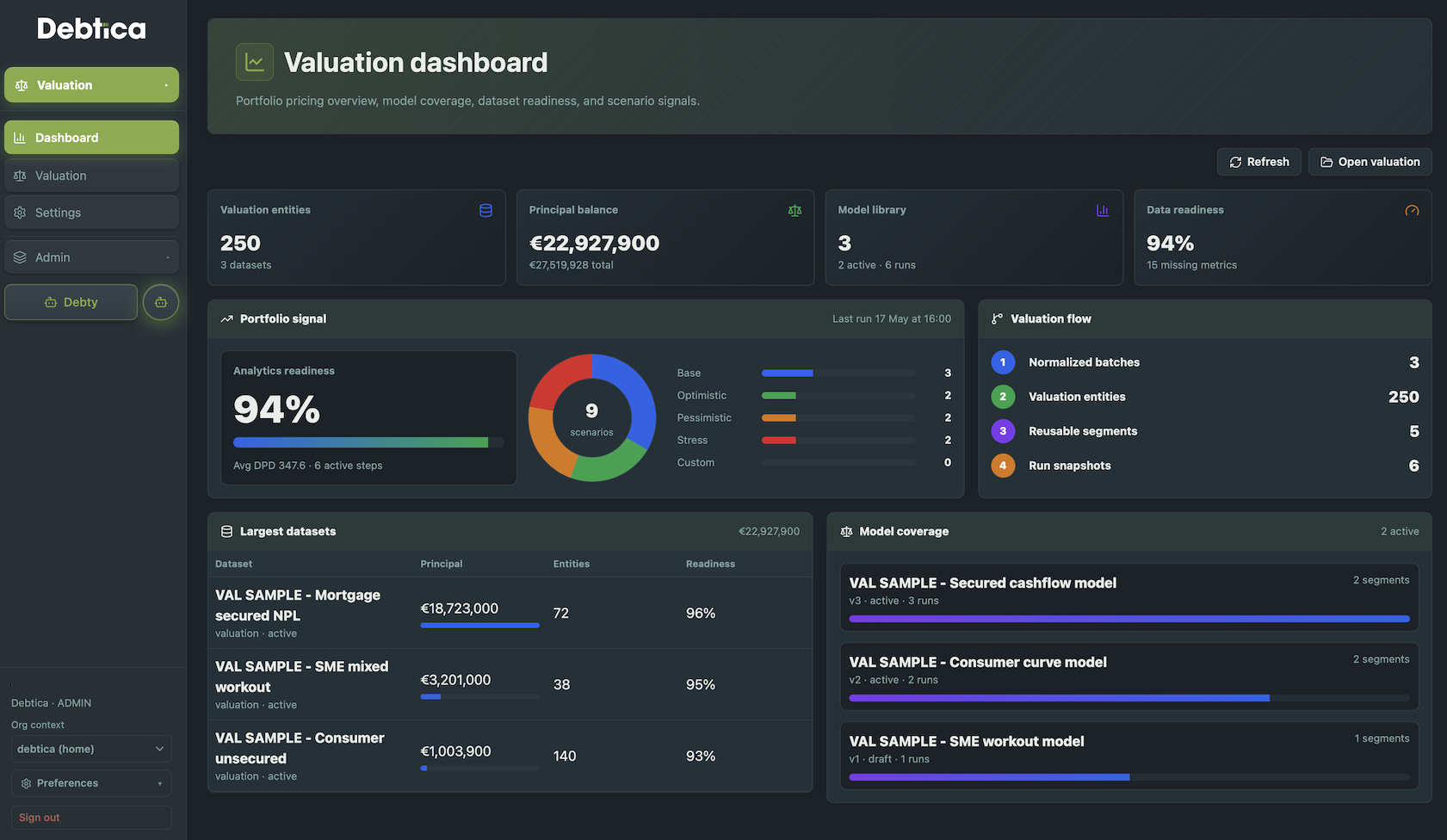
Valuation product view
Valuation is the buyer-side analytics workspace for NPL packages. Users can map clean datatapes, compare direct and derived attributes, apply reusable valuation models, and review base, optimistic, pessimistic and stress scenarios before making portfolio decisions.
What it handles
Valuation in practice
Support portfolio and case-level valuation with assumptions, scenario views and review packs connected to the same data foundation.
Scenario-based assumptions for portfolio value and recovery expectations.
Structured review packs for pricing, purchase or prioritisation decisions.
Connections back to data quality, documents and collection context.
Valuation Analytics Workspace
Turn portfolio data into comparable valuation scenarios
Valuation gives buyers, investors and portfolio teams a structured workspace for pricing support. Clean datasets, assumptions, valuation models, scenario runs and review snapshots stay together so decisions are based on traceable inputs rather than disconnected spreadsheets.
Debt Buyers
Investors
Portfolio Managers
Risk Teams
Models
Versioned valuation formulas and reusable assumption structures
Scenarios
Base, optimistic, pessimistic and stress views for comparison
Segments
Portfolio and case grouping for sharper recovery expectations
Snapshots
Reviewable run evidence for investment and pricing decisions
The problem
Portfolio pricing needs more than a single spreadsheet model
Valuation work becomes fragile when formulas, assumptions, source data and decisions live in separate files without a controlled review history.
Unclear data foundation
Pricing confidence drops when the team cannot see which dataset, filters or quality checks sit behind a valuation view.
Formula drift
Different analysts can apply slightly different logic unless models and assumptions are reusable, versioned and reviewable.
Weak decision evidence
Investment, purchase or prioritisation decisions need a clear record of scenarios, assumptions and outputs.
How it works
Four steps from clean data to valuation view
Valuation is designed to consume analytics-ready data and turn it into structured decision material.
Select
Choose the valuation-ready portfolio, batch, segment or case group to analyse.
Model
Apply reusable valuation models, direct attributes, derived attributes and assumption sets.
Compare
Run base, optimistic, pessimistic or stress scenarios and compare the outputs side by side.
Review
Keep snapshots, assumptions and results available for portfolio decisions and audit evidence.
Valuation features
Everything your team needs for controlled portfolio valuation
From model setup to scenario comparison, Valuation keeps pricing logic transparent and connected to the same data foundation.
Valuation Models
Reusable, versioned model definitions for portfolio and case-level calculations.
Assumption Sets
Keep recovery, timing, cost and risk assumptions explicit and comparable.
Scenario Views
Compare base, upside, downside and stress views without duplicating workbooks.
Portfolio Segments
Group cases by attributes, quality signals or business criteria for more focused analysis.
Derived Attributes
Use calculated indicators alongside direct source fields for better pricing context.
Run Snapshots
Preserve valuation outputs with the inputs and assumptions used at that point in time.
Review Packs
Create decision material that explains why one scenario or price view was chosen.
Connected Evidence
Reference data quality, document and collection context when valuation depends on wider evidence.
Who it is for
Built for teams that price, review or prioritise debt portfolios
Debt Buyers
Compare acquisition scenarios before committing to a portfolio purchase.
Investors
Review assumptions, downside sensitivity and expected recovery views.
Portfolio Managers
Prioritise action using valuation signals connected to operational context.
Risk Teams
Keep valuation logic, scenario evidence and review history available for governance.
Operating model
A focused analytics module, connected when needed
Valuation can support focused portfolio pricing work on its own. When combined with other Debtica modules, it can consume clean migration outputs, include document evidence, inform collection strategy and support marketplace transaction decisions.
Standalone
Valuation workspace
Use Valuation to model portfolios, compare assumptions and prepare review material as a focused analytics workflow.
Data, evidence and transactions
Add Migration, Document, Collection or Marketplace when valuation should connect directly to source data, evidence, actions or sales processes.
Platform context
Part of the wider Debtica platform
This module is designed to connect with the other Debtica modules through shared data, permissions and audit history.
Get in touch
See Debtica in action
Tell us which module is most relevant for you and we will prepare a walkthrough around your real workflow.
- Module-specific walkthroughs
- SaaS and on-premise options
- Newsletter opt-in inside the form
- Response within one business day
Request a Demo
Share your details and tick Debtica updates if you want product notes as well.
Email is required. Phone is optional.
© 2026 Debtica. All rights reserved.